Key Takeaways:
- AI is now a standard tool for generating complex textures and lighting, not a replacement for designers.
- 2026 focuses on “Tactile Minimalism”—designs that look like you can feel their texture through the screen.
- Bio-morphic and organic 3D shapes are trending to reflect a global focus on eco-consciousness.
- 3D is moving from static images to interactive components in web and spatial UI.
In 2026, the visual world is no longer flat. We have officially entered an era where “depth” is the default language of communication. Whether you are scrolling through a mobile app, exploring a virtual storefront, or looking at a digital billboard, 3D illustration is everywhere. But why does it matter more now than it did five years ago?
The answer lies in our craving for immersion. As our digital and physical lives blend through AR (Augmented Reality) and spatial computing, flat 2D icons often feel “thin” or “lifeless.”
3D illustration bridges that gap. It provides a sense of volume, weight, and personality that makes a brand feel more “real.” In 2026, 3D isn’t just a decoration; it’s a strategic asset used to build trust, explain complex ideas, and create memorable emotional connections with users. To get more ideas about 3D illustration trends 2026, read our review below!
The Evolution of 3D Illustration
The journey of 3D art has been a rapid climb. Historically, 3D was a specialized skill locked behind expensive software and steep learning curves. However, the mid-2020s saw a massive shift. The democratization of powerful tools and the rise of web-based 3D engines allowed designers to experiment without needing a NASA-grade supercomputer.
We have moved away from the “plastic” look of the early 2020s. According to Envato’s insights, the industry has shifted toward “Nostalgic Futurism.” This means we are seeing a mix of retro aesthetics (think 90s tech vibes) rendered with the high-fidelity precision of modern 2026 technology.
We’re no longer trying to make 3D look like a perfect computer render. Conversely, we are trying to make it look like a piece of art that exists in a tangible space.
How AI Is Used in Branding Today
One cannot talk about 2026 without mentioning Artificial Intelligence. However, the “AI vs. Artist” war has largely cooled down into a productive partnership. Today, AI is the “engine room” of the 3D workflow.
As stated by Creative Bloq, AI’s primary role in current 3D design is handling “procedural generation.” Instead of manually painting every scratch on a metallic surface, designers use AI to generate hyper-realistic textures instantly.
In branding, this allows for “Dynamic Visual Identities.” A brand’s 3D logo can now change its texture or lighting in real-time based on the weather, the user’s location, or even the stock market’s performance. AI has definitely turned 3D from a static file into a living, breathing part of a company’s identity.
3D Illustration Trends in 2026
As we look at the current landscape on platforms like Behance, several distinct trends have emerged as the “standard” for 2026.
1. Tactile Minimalism
This is perhaps the biggest trend of the year. People are tired of “perfect” digital surfaces. Tactile Minimalism focuses on materials that have a physical history. Think of 3D renders that look like rough-cut stone, soft felt, or porous clay. These “imperfections” make the digital world feel more human and less “robotic.”
2. Bio-morphism & Organic Flows
Reflecting global concerns about the environment, 3D shapes are becoming more “organic.” Instead of sharp corners and rigid cubes, we see soft, flowing curves that mimic biological cells or water movements. This trend, often referred to as “Bio-morphism,” is used by tech and wellness brands to appear more approachable and sustainable.
3. Glassmorphism 2.0 (Refraction Realism)
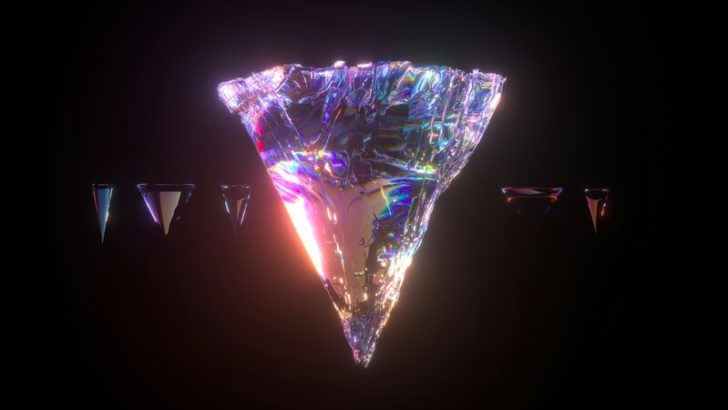
The “glass” look has evolved. In 2026, it’s all about caustics (the way light bends and creates beautiful), shimmering patterns when it passes through a transparent object. This adds a layer of “premium” quality to any design, making UI elements look like expensive crystals or high-end optics.
4. Kinetic Depth
With the improvement of web performance, 3D illustration trends 2026 are now interactive. When a user moves their mouse or tilts their phone, the 3D illustration reacts. This “Kinetic Depth” ensures that the user isn’t just a passive observer but an active participant in the visual story.
| Trend | Key Visual Element | Best For |
| Tactile Minimalism | Rough textures, felt, clay | Lifestyle & Crafts Brands |
| Bio-morphism | Fluid, organic shapes | Sustainability & Health |
| Glassmorphism 2.0 | Light refraction, caustics | Luxury & Tech UI |
| Nostalgic Futurism | Neon, grainy 90s tech | Creative & Gaming |
Challenges and Considerations
Despite the beauty of 3D, it comes with unique challenges in 2026:
- The Performance Gap: Not everyone has the latest hardware. Designers must balance high-quality 3D visuals with fast loading times. This has led to the rise of “Optimized Realism,” in which textures perform the work that heavy geometry once handled.
- The Uncanny Valley: Making characters look too human can sometimes creep people out. In 2026, many brands are opting for “stylized realism” (characters that look like high-end toys or sculptures rather than actual humans) to avoid this.
- Visual Overload: With 3D becoming so easy to create, there is a risk of “visual noise.” As stated by design experts on Behance, the best 3D design in 2026 is often the one that knows when to be subtle.
Conclusion: 3D Illustration as a Strategic Visual Asset
In conclusion, the 3D illustration Trends 2026 is about more than just “looking cool.” It is about creating a sensory experience in a digital world. By using tactile textures, organic forms, and AI-driven workflows, designers can create visuals that resonate on a deeper, more emotional level.
As the digital landscape continues to evolve, staying updated with these trends is vital. However, trends are only as good as the tools and assets you use to implement them. To truly master these 2026 aesthetics, you need high-quality resources that align with modern standards.
Keeping up with 2026 trends requires the right foundation. If you’re looking to bring these 3D trends to life, check out Just the Skills. Whether you need modern typography to complement your 3D scenes or professional design assets that fit the “Tactile Minimalism” aesthetic, Just the Skills provides a curated selection of fonts and tools designed for the modern creator.