
Well, let’s be honest. Building a professional website used to be a massive headache, right? You either had to spend months learning a confusing world of code or hire an expensive agency and hope they truly understood your vision.
For most small business owners, artists, or anyone with a new idea, this barrier has definitely become an enormous source of frustration and delay. But what if you could just describe what you want? And simply type: “I need a website for my new shoe store in Bali,” and voila, a beautiful, working website just appeared?
Nowadays, that’s no longer science fiction. It becomes the new reality of the AI website builder. Artificial Intelligence (AI) has moved from a background helper to a main-stage role, automating and optimizing every part of website creation. To get more ideas about this, read our review!
How AI Generates and Optimizes Websites
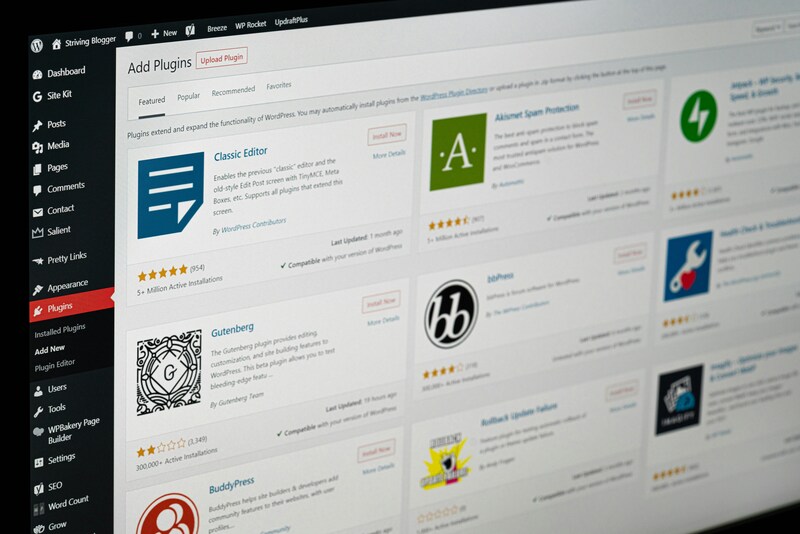
So, how does this magic actually work? You need to think of an AI website builder less like a toolbox and more like a super-smart assistant. When you give it that prompt about Bali’s shoe store, for example, it doesn’t just grab a dusty old template. It will act as your designer, copywriter, and coder all at once.
- As a Designer: It will understand “shoe store” and instantly generate a unique design with a catchy or modern feel. Also, it helps you pick color palettes and clean fonts, and even finds high-quality (and legally usable) photos of shoe shops.
- As a Copywriter: It will write a first draft for your “About Us” page, a “Contact” form, and even product descriptions for your different types of shoes.
- As a Coder: In the background, it will help you to write all the code to make sure your website looks great on a giant desktop monitor and a tiny smartphone screen, right from the start.
However, the AI doesn’t just build it and walk away. This is where it gets genius. As web experts at firms like Innermedia point out, AI is a game-changer for A/B testing. It can automatically create two versions of your “Buy Now” button (a red one and a green one) and show them to different visitors to see which one gets more clicks.
In addition, it can do this for headlines, images, and layouts. That means it is constantly learning and improving your site’s performance. On the other hand, it also handles complex, monotonous tasks.
What’s more, Digital landscape experts, like those at SDLC Corp, note that AI is crucial for web accessibility. It can scan your website and automatically add “alt-text” to images. That way, visually impaired visitors can know what’s there, and it also fixes color-contrast issues, making the web more accessible to everyone.
Key Benefits and Stakeholders

This new tech isn’t just “neat”. You must see that it’s also completely changing the game for three key groups.
1. For Businesses & Non-Designers
This is the big one. For the small business owner, the barrier to entry has been totally erased. Today, you can have a professional, world-class website up and running in a single afternoon. This “democratization” of web design means your great idea can compete with the big guys on its own merit, not on your coding skills.
2. For Designers & Developers
Wait, isn’t this bad for designers? Actually, no. Most designers will tell you that a lot of their job is “grunt work”, resizing 50 photos, testing on 10 different browsers, or building the same “Contact” page for the hundredth time. Fortunately, an AI website builder can now automate that tedious stuff.
This frees up human designers to focus on what they do best: the high-level stuff. They get to focus on brand strategy, creating a genuinely unique creative concept, or mapping out a complex user journey. Then the AI becomes a “co-pilot” that helps to handle the technical execution, so the humans only focus on the creative direction.
3. Enhanced User Experience
Finally, people who browse the web win big. That’s because AI is amazing at “hyper-personalization.” Imagine visiting a news site, and it automatically shows you more stories about your favorite sports team and fewer about politics.
Or, picture an online store that doesn’t just show you “related items,” but completely rearranges its homepage to feature the exact styles you’ll adore. This makes the web feel less like a one-size-fits-all billboard and feel more personal.
The Limitations and the Human Element
Yes, so AI isn’t perfect at all. It’s a potential tool with some major blind spots. For example, it’s excellent at execution but terrible at the human aspects of design.
The “Cookie-Cutter” Challenge
This has become the biggest complaint so far. Because AI learns from millions of existing websites, its creations can sometimes feel a bit generic. We may see it as a seen-it-before design.
Luckily, an AI website builder is fantastic at creating a good site that follows all the rules. Yet, it struggles to make a groundbreaking site that breaks the rules in an innovative, creative way.
Context and Empathy Gaps
This is the most crucial part: AI has no empathy. It cannot get your “why”. It doesn’t even understand your brand’s deep story, your mission, or the emotional connection you want to build with your customers. Furthermore, it can lack context, cultural understanding, and feeling.
The Designer’s New Role
This is the big reason why designers aren’t going anywhere. Their job is just evolving. The future isn’t “AI vs. Human”, it’s “AI + Human”. Many in the tech industry refer to this as the “human-in-the-loop” model.
It means that a human’s job is to be the Art Director, and the AI becomes a very fast assistant. So, when humans need to share vision, strategy, and empathy, AI provides speed and optimization. Then it becomes a great partnership!
So, where is this all going? The future is, for sure, conversational. Soon, you won’t have to drag and drop boxes again. You will just need to talk to your website, and voila, everything is set beautifully. Without a doubt, the AI website builder is a whole new way of creating.